
How to Measure Fabric GSM (Grams per Square Meter)
GSM (grams per square meter) is the standard measure of fabric weight. It tells buyers and QC teams how heavy and dense a fabric is: a light voile might be 60 GSM, a T-shirt jersey around 150–200, and denim or canvas 300 and up. Measuring it yourself takes a sample cutter, a precision balance and about a minute per sample.
What you need
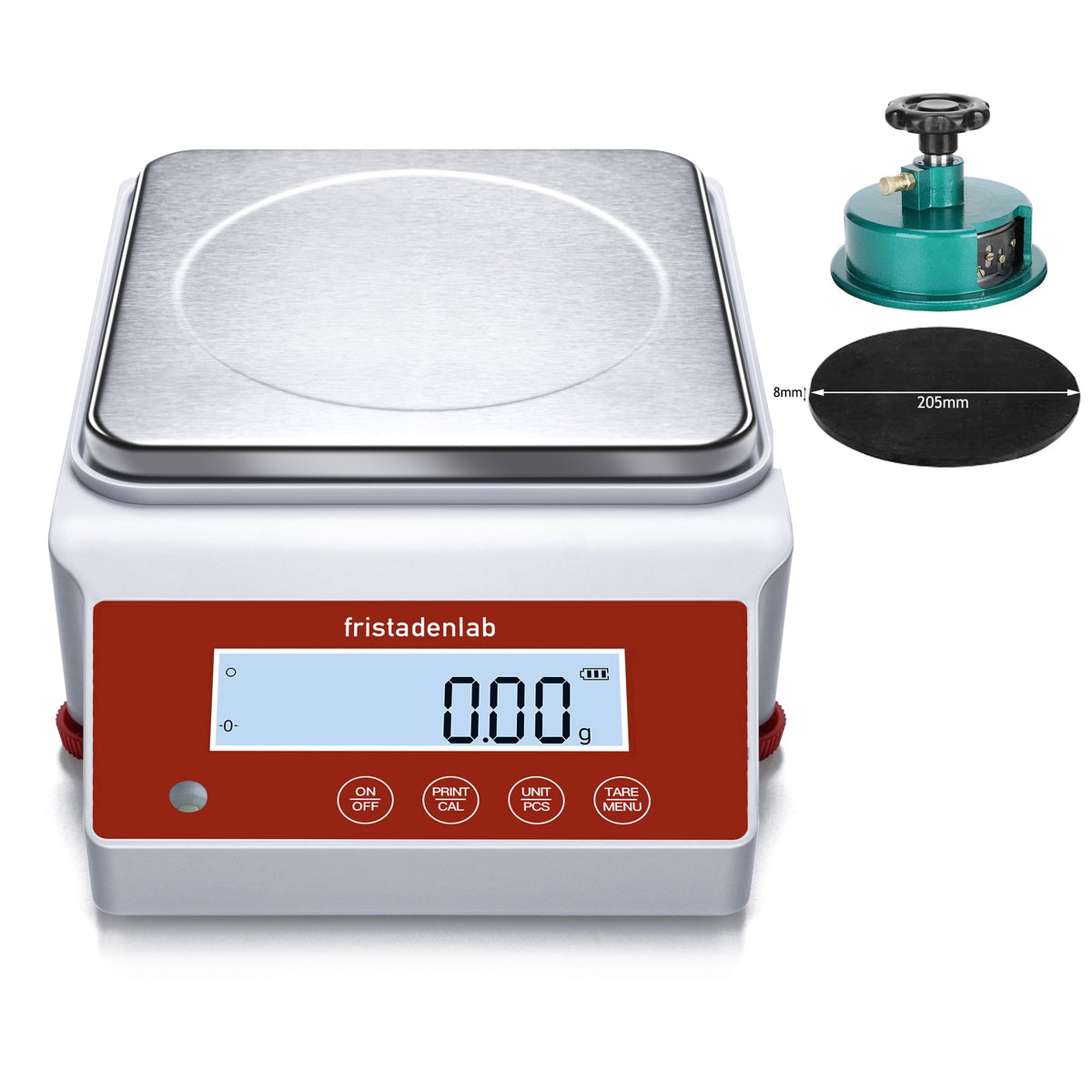
- A round GSM sample cutter, which cuts a disc of exactly known area (commonly 100 cm²)
- A precision balance reading to 0.01 g
- A cutting pad
Our Textile Scale and GSM Cutter Kit includes both: a YP2002 balance (2000 g × 0.01 g) and a sample cutter.
The formula
GSM = sample weight (g) ÷ sample area (m²)
A 100 cm² disc is 0.01 m², so with a 100 cm² cutter the math is simple: GSM = sample weight in grams × 100. A disc weighing 1.85 g is a 185 GSM fabric.
Using a different sample size, or need the result in oz/yd²? Our free Fabric GSM Calculator does the conversion for any sample area.
Step by step
- Condition the fabric. Moisture changes weight. For consistent results, let samples sit in your normal room conditions for several hours before testing.
- Lay the fabric flat on the cutting pad without stretching it. Avoid selvedges, folds and visible defects.
- Cut a disc with firm, even pressure so the edge is clean and the full area is cut.
- Zero the balance, then weigh the disc and note the reading to 0.01 g.
- Calculate GSM (weight × 100 for a 100 cm² disc).
- Repeat on at least three to five discs taken from across the width of the fabric, and average the results.
Why 0.01 g readability matters
With a 100 cm² sample, every 0.01 g on the balance equals 1 GSM. A balance that reads only to 0.1 g can't tell 180 GSM from 189 GSM, which is the difference between in-spec and out-of-spec for many buyers.
Common mistakes
- Stretched samples: knits stretched during cutting give a falsely low GSM.
- Frayed or incomplete edges: a dull cutter blade loses area and weight. Replace blades as they wear.
- One sample only: fabric weight varies across a roll. Average several discs.
- Drafts on the balance: at 0.01 g, air movement matters. Close doors and use the draft shield if your balance has one.
Recording results
For QC records, note the fabric lot, date, conditioning time, individual readings and the average. A balance with an RS-232 port, like the YP2002, can send readings straight to a computer so nothing is mistyped. See our YP Series balance support page for calibration and RS-232 setup.
Ready to test? See the Textile Scale and GSM Cutter Kit, or browse our precision balances.


Leave a comment
This site is protected by hCaptcha and the hCaptcha Privacy Policy and Terms of Service apply.