
A Beginner's Guide to the Fristaden Lab Catalog: What Each Piece of Equipment Does
Walking into the world of lab equipment can feel overwhelming. Every instrument has its own name, its own specs and its own jargon. But underneath, most lab tools do one simple job well. This guide walks through the main categories in the Fristaden Lab catalog and explains, in plain language, what each one does and how it works. Whether you are a hobbyist, a small-batch formulator or an early-stage business setting up your first workspace, this should help you figure out what you actually need.
Weighing: Precision Balances
A precision balance is the everyday workhorse of the lab. You place a sample on the pan, and the balance tells you its mass, typically down to a hundredth or a thousandth of a gram. Inside, the pan rests on a sensor called a load cell. When weight is added, the load cell flexes very slightly, and that tiny movement is converted into an electrical signal, which the balance turns into the number on the display. The tare button lets you zero out a container, so you only measure what you add to it. Precision balances are ideal for mixing recipes, portioning ingredients and general-purpose measuring.

Counting: Counting Scales
A counting scale works like a regular scale with one clever addition. You place a known number of identical items on it, say 10 screws or 20 capsules, and the scale calculates the average weight of a single piece. After that, you pile on the rest, and it divides the total weight by the piece weight to tell you how many items there are. It is a fast way to count small parts, tablets, caps or packaging components without counting by hand.

Analytical Weighing: Analytical Balances
When a precision balance is not precise enough, an analytical balance steps in. These measure down to a tenth of a milligram (0.0001 g), which is the level needed for tasks like preparing standard solutions or weighing very small amounts of active ingredients. Most use a technique called electromagnetic force restoration: the pan sits within a magnetic field, and the balance measures how much electrical current it takes to hold the pan perfectly in place. More weight means more current, and that current becomes your reading. Because they are so sensitive, analytical balances sit inside an enclosed draft shield, a glass chamber that keeps air currents from affecting the result. They also need a stable, level surface that is free of vibration.

Moisture Analyzers
A moisture analyzer tells you how much water a sample contains, and it does it quickly. It is essentially a precision balance with a heater built in. You place a small sample on the pan, and the instrument first records its starting weight. A heating element, usually a halogen lamp or infrared heater positioned above the sample, then dries it while the balance keeps weighing. As water evaporates, the sample gets lighter. When the weight stops changing, the analyzer compares the final weight to the starting weight and shows the moisture content as a percentage. This method replaces the traditional approach of drying a sample in an oven for hours and weighing it by hand, so it is a handy tool for checking powders, raw materials, grains, creams and other products where water content affects quality, shelf life or consistency.

pH Meters
A pH meter measures how acidic or basic a liquid is. The key part is the probe, which contains a thin glass bulb filled with a solution of known acidity, along with a reference element. When you dip the probe into your sample, hydrogen ions in the liquid interact with the glass membrane and create a small voltage. The more acidic the sample, the different that voltage is, and the meter reads the voltage and converts it into a pH value on the display. Because probes drift over time, they should be calibrated regularly using buffer solutions of known pH, and they should be stored in the proper storage solution so the glass stays hydrated and responsive.

Glassware
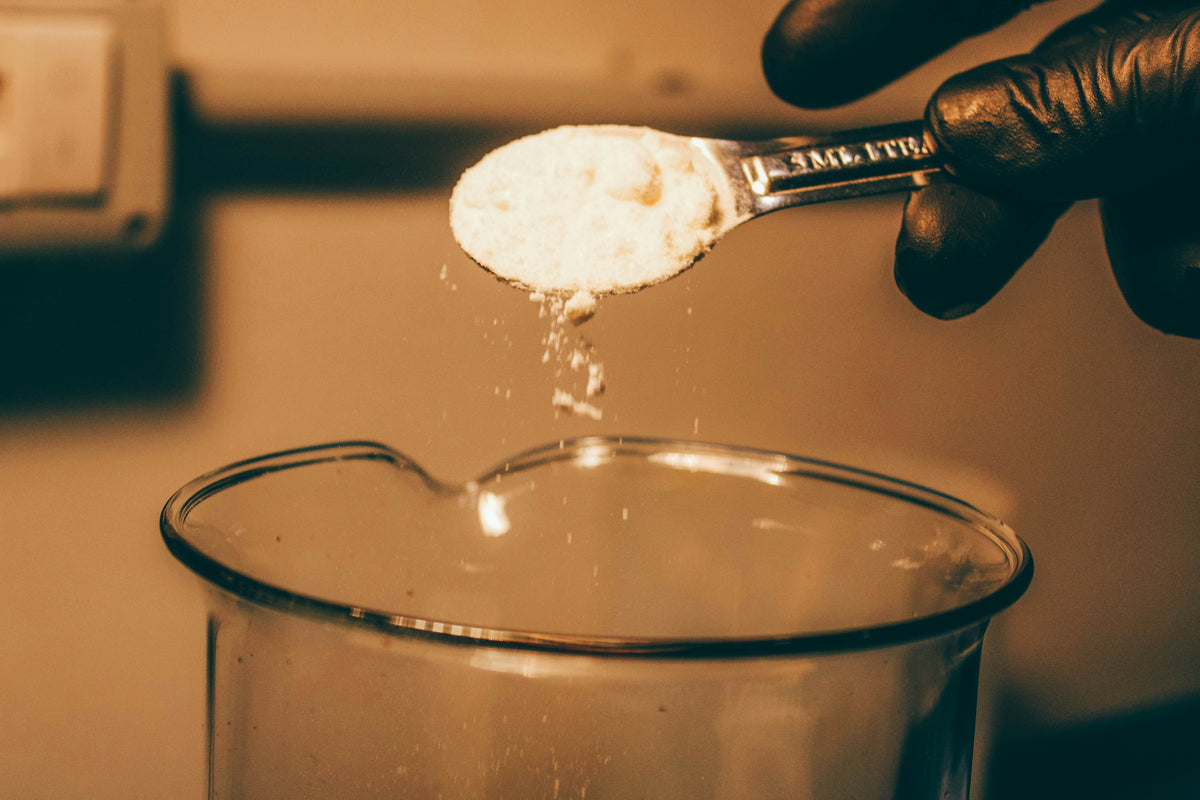
Glassware is the backbone of any lab setup: beakers for mixing and holding liquids, flasks for heating and storing solutions, graduated cylinders for measuring volumes, and more. Most lab glassware is made from borosilicate glass, which handles heat and sudden temperature changes much better than ordinary glass and resists most chemicals without reacting. The printed markings let you measure volume, while the shape of each vessel is designed for its job: wide beakers for easy access, narrow cylinders for accurate readings, and flasks with a narrow neck to limit splashing and evaporation.

Centrifuges
A centrifuge separates the components of a mixture by spinning them quickly. Samples in tubes are placed in a rotor, and a motor spins the rotor at high speed. The spinning creates a force that pushes denser material toward the bottom of the tube, while lighter material stays on top. What would take hours to settle under gravity can separate in minutes. Centrifuges are used to separate solids from liquids, to pellet particles and to split layers in a sample. Speed is usually shown in RPM (rotations per minute), and the tubes must always be loaded in balanced pairs so the rotor spins smoothly and safely.

Water Baths
A water bath is a simple, reliable way to heat samples gently and evenly. It is a tank of water with a heating element and a thermostat. You set your target temperature, the heater warms the water, and a temperature sensor keeps it steady. Because water transfers heat so evenly, containers placed in the bath warm gradually without hot spots, which is far gentler than heating directly on a flame or a hot surface. Water baths are commonly used to melt ingredients, incubate samples, warm reagents or keep a mixture at a constant temperature for a set time.

Overhead Stirrers
An overhead stirrer is built for mixing larger volumes or thicker liquids that smaller stirrers cannot handle. It has a motor mounted above the container, which spins a long shaft with a blade or impeller attached at the bottom. You set the speed in RPM, and the blade turns through the liquid to blend it. Because the motor is above the vessel and not underneath, it can generate far more torque, which is the turning force needed to move through creams, gels, slurries and other viscous mixtures. Different blade shapes are used for different jobs, so you can match the mixing action to your material.

Magnetic Stirrers
A magnetic stirrer mixes liquids without touching them. You drop a small magnetic stir bar, usually coated in an inert material, into your container, and set the container on top of the stirrer. Underneath the plate, a motor spins a magnet. As that magnet turns, the stir bar inside the container follows it and spins as well, swirling the liquid. Speed is adjustable, and many models include a built-in heating plate so you can warm and stir at the same time. Magnetic stirrers are perfect for thin to medium-viscosity liquids in beakers and flasks, and because nothing pierces the container, they are great for keeping samples clean and sealed.

Vacuum Filtration Sets
Vacuum filtration speeds up the process of separating solids from liquids. A filter sits on top of a flask, and a vacuum pump pulls air out of the flask. The lower pressure underneath draws the liquid rapidly through the filter, leaving the solid particles behind on the surface. Compared with gravity filtering, which can be slow, vacuum filtration is quick and thorough, making it useful for clarifying solutions, collecting solids and removing particles from a liquid.

Choosing the Right Equipment
Every tool in the catalog exists to make one part of your process more accurate, more consistent or more efficient. A good starting point is to think about what you do most often: measuring, mixing, heating, separating or testing. Build around that core, and add specialized equipment as your needs grow. Lab-grade precision does not need to come with an institutional price tag, and you can browse the full range on the Fristaden Lab store.
☝️ Need specialised advice or support for your equipment? Contact us! We're a real team, here to help, and we aim to respond in less than 24 hours.


Dejar un comentario
Este sitio está protegido por hCaptcha y se aplican la Política de privacidad de hCaptcha y los Términos del servicio.